


Table of Contents
1. The Living Room After Function Broke Down
2. Why Tables Became the New Design Anchor
3. Craft as a Response to Digital Uniformity
4. Material Intelligence in Ash and Glass
5. Proportion, Weight, and the Physics of Presence
6. The Ellipse as a Human-Centric Geometry
7. Beyond Modern, Designing for What Comes Next
The Living Room After Function Broke Down
At Home Furniture and Patio, we have observed a subtle shift that rarely gets named. The living room no longer performs a single role. It hosts work, rest, conversation, streaming, thinking, and often all of them at once.
As this fragmentation accelerated, the furniture at the centre of the room had to change. Living Room Tables were once passive surfaces. Today, they operate more like systems. They anchor movement. They manage visual calm. They negotiate between human behaviour and spatial logic.
In a way that feels quietly science fictional, the table has become the room’s stabilising intelligence.
Why Tables Became the New Design Anchor
Sofas move. Chairs rotate. Screens multiply. The table remains.
This is why Modern Living Room Tables now carry more design responsibility than ever before. They do not shout for attention, but they hold the room together through proportion, material honesty, and restraint.
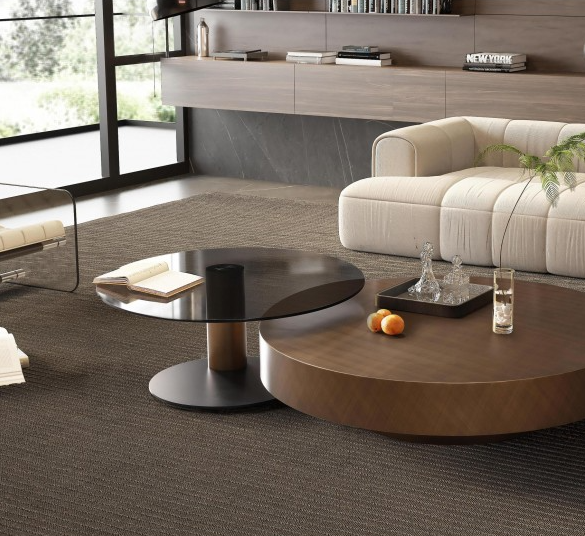
The Seymour cocktail table exemplifies this shift. Known simply as The Glass Coffee Table, it is not designed to dominate. It is designed to regulate. Its presence is deliberate and composed, providing structure without rigidity.
We believe this kind of design reflects a deeper understanding of how contemporary spaces actually function.
Craft as a Response to Digital Uniformity
In an era where furniture is often rendered, simulated, and mass optimised before it is ever touched, craft becomes a counterbalance rather than a luxury.
The Seymour table is built from solid ash wood, finished in a rich walnut tone that reveals grain rather than concealing it. This choice matters. Ash is resilient, flexible, and expressive. It responds to light and movement differently throughout the day.
At Home Furniture and Patio, we value pieces that carry evidence of making. Craft signals intention, not nostalgia. It reminds us that design decisions were made by people, not presets.
Material Intelligence in Ash and Glass
The elliptical tabletop pairs solid ash wood with an 8mm clear tempered glass insert. This is not contrast for the sake of novelty. It is a conversation between opacity and transparency.
Glass introduces lightness without fragility. Tempering ensures durability while allowing sightlines to pass through the centre of the table. This matters more than it seems. Visually lighter tables reduce cognitive clutter in spaces already saturated with stimuli.
The walnut finished ash frame grounds the piece emotionally. Warm wood tones counterbalance the cool precision of glass, creating equilibrium rather than tension.
This balance is what elevates Modern Living Room Tables beyond surface level aesthetics.
Proportion, Weight, and the Physics of Presence
Dimensions are not just numbers, they are behavioural cues.
At 16.50 inches high, 48.50 inches wide, and 26.25 inches deep, the Seymour table sits comfortably within modern seating arrangements without interrupting sightlines. Its height encourages relaxed interaction, whether feet are propped up or objects are placed temporarily.
Weighing approximately 32 pounds, the table has enough mass to feel stable without becoming immovable. This matters in living rooms that reconfigure frequently. Furniture that resists change creates friction. Furniture that accommodates it supports modern living.
This sensitivity to proportion reflects a deeper understanding of how people inhabit space today.
The Ellipse as a Human-Centric Geometry
Rectangles dominate architecture because they are efficient. Ellipses exist because they are humane.
The elliptical top of The Glass Coffee Table softens circulation paths. There are no sharp corners to navigate. Movement flows around it naturally, especially in shared spaces.
From a design theory standpoint, curved forms reduce visual aggression. In science fiction narratives, advanced environments often replace harsh geometry with fluid lines. This table quietly aligns with that future without overt gestures.
It is an example of how Living Room Tables can contribute to emotional ease, not just utility.
Beyond Modern, Designing for What Comes Next
Modern design once promised progress through minimalism. Today, progress looks different. It is about adaptability, material honesty, and emotional intelligence.
The Seymour cocktail table does not chase trends. It aligns with a future where furniture must endure changing technologies, shifting lifestyles, and evolving tastes without constant replacement.
At Home Furniture and Patio, our perspective is simple. The most forward-looking pieces are those that remain relevant without demanding attention. Tables that do not try to predict the future, but are ready for it.
This is what Style Beyond Modern means to us.
Rewind
As living rooms continue to absorb more of our lives, the furniture within them must work harder without appearing to try. The table at the centre becomes less an object and more an interface between people, space, and time.
Our grounded takeaway is this: in a future shaped by rapid change, the most advanced design choice is often the one that creates calm, clarity, and continuity.
FAQs
What defines Modern Living Room Tables today?
Modern living room tables prioritise proportion, material balance, and adaptability, supporting multifunctional spaces without visual overload.
Why is solid ash wood used in Living Room Tables?
Solid ash wood offers strength, flexibility, and expressive grain, making it ideal for living room tables that need both durability and warmth.
What is the benefit of a glass insert in a coffee table?
A tempered glass insert reduces visual weight, allows light to pass through, and enhances spatial openness without sacrificing strength.
How does table height affect living room comfort?
A height around 16 to 17 inches aligns well with modern seating, supporting relaxed posture and easy reach.
Are elliptical tables practical for everyday use?
Yes, elliptical tables improve circulation and reduce sharp edges, making them practical and comfortable for shared living spaces.
How do Modern Living Room Tables stay relevant over time?
They rely on timeless materials, thoughtful geometry, and adaptable proportions rather than trend-driven design features.


