

One clearance rule, one tape measure, and you'll never order the wrong stool again.
The quick answer
A standard 36-inch kitchen counter needs counter stools with a seat height of 24 to 27 inches. A raised 40 to 43-inch bar needs bar stools with a seat height of 28 to 33 inches. Either way, leave 10 to 12 inches of clearance between the seat and the underside of the counter or bar. That's the one rule that makes almost every stool decision easy.
Counter height vs. bar height, in plain terms
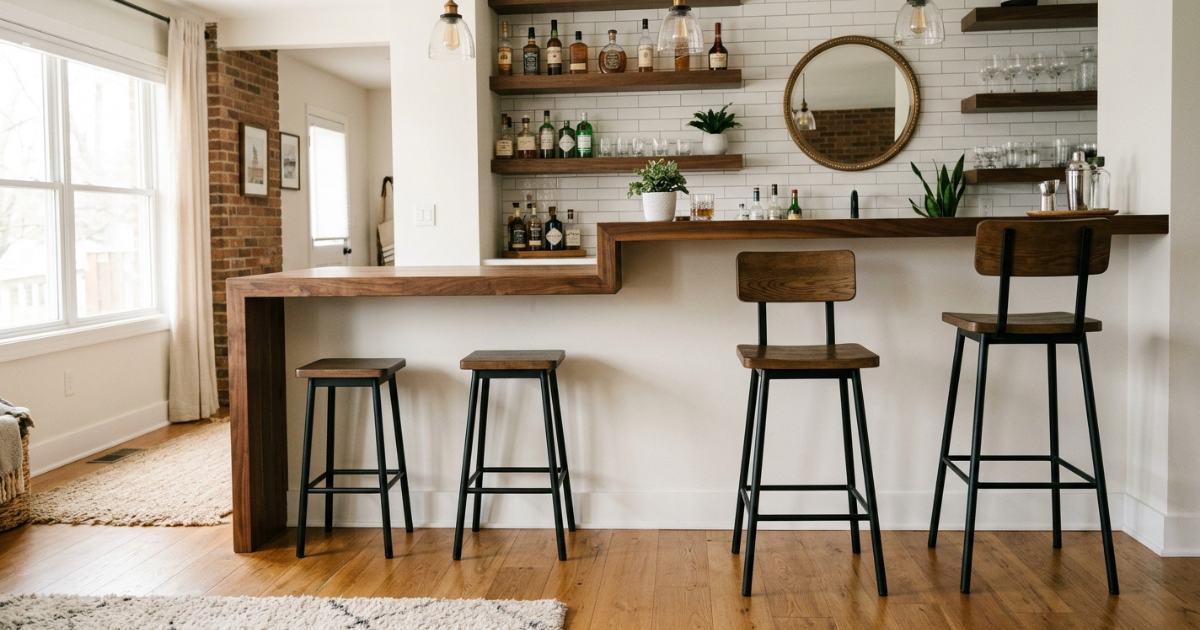
“Counter height” and “bar height” describe two different standard surface heights in a home, and each one needs its own stool.
A counter is the everyday height you'll find in most kitchens: the main countertop, a kitchen island, or a peninsula that sits around 36 inches off the floor. A bar is taller — the kind of raised eating ledge you see on an island's overhang, a basement bar, or a pub-style table, usually 40 to 43 inches high. The stool has to match whichever one you're sitting at, or knees hit wood and elbows hover awkwardly above the surface.
Standard counters (~36")
Seat height: 24 to 27 inches. Fits kitchen islands and peninsulas, standard countertop-height desks, and most built-in breakfast bars.
Raised bars (~40-43")
Seat height: 28 to 33 inches. Fits raised island overhangs, home bars and basement bars, and pub-style or bistro tables.
The one rule that solves almost every sizing question
Measure the vertical gap between the top of the seat and the underside of the counter or bar. You want 10 to 12 inches of open space — enough for knees and thighs to slide in comfortably, but not so much that elbows sit below the surface.
Too little clearance and knees knock the counter. Too much and you're reaching up to eat. This single measurement is why counter stools land at 24-27" and bar stools land at 28-33": both are just their surface height, minus 10 to 12 inches.
Surface height → ideal seat height
Not every surface is a clean 36" or 42". Use this table to find the right seat height for whatever you're actually working with, including the classic “what stool fits my 36-inch counter” question.
|
Surface height |
Typical surface |
Ideal seat height |
Stool type |
|
28-30" |
Standard dining table |
17-19" |
Dining chair, not a stool |
|
34-36" |
Standard kitchen counter or island |
24-27" |
Counter stool |
|
37-39" |
Taller counter or peninsula overhang |
25-28" |
Counter or adjustable stool |
|
40-43" |
Raised bar or pub table |
28-33" |
Bar stool |
|
44"+ |
Extra-tall or commercial-style bar |
32-34" |
Extra-tall bar stool |
Landed between two rows, or shopping for more than one surface height in the same room? An adjustable height stool covers the gap without a second measuring trip.
The “measure once” checklist
Do this before you add anything to cart. It takes about five minutes and it's the difference between a stool that fits and one you're returning.
-
Measure the surface height. Floor to the top of the counter or bar, at the exact spot where people will sit — corners and overhangs can differ from the rest of the run.
-
Subtract 10 to 12 inches. That's your target seat height range. A 36" counter gives you 24-27". A 42" bar gives you 30-32".
-
Check the knee clearance, not just the height. Measure how far the overhang extends past any support legs or apron. You need at least 6" of knee room under the counter for a comfortable sit.
-
Give each seat 26 to 30 inches of width. Count how many stools you actually want side by side, then confirm the counter run is long enough that no one's sharing elbow room.
-
Confirm swivel clearance if the stool is against a wall. Swivel stools need a few extra inches of radius behind the seat back to turn freely — measure from the counter edge to the nearest wall or cabinet.
-
When in doubt, test-sit before ordering the set. Order one stool first, sit at your actual counter for a few minutes, then order the rest — or choose an adjustable-height stool that removes the guesswork entirely.
Shop by height
Once you know your number, it's just a matter of style. Here's where to start looking, sorted by the measurement you just took.
-
36" counters - Counter Height Bar Stools
-
40-43" bars - Bar Height Stools
-
Not sure yet - Adjustable Height Stools
-
Kitchen islands - Kitchen Bar Stools
-
Outdoor bars - Patio Bar Stools
-
Building the whole setup - Bar & Pub Tables
Two picks worth a look
Counter height, 26" seat: The Armen Living Dylan 26" Counter Height Barstool sits right in the middle of the 24-27" range that fits a standard 36" counter, in brushed stainless steel with a faux leather seat.
One stool, two heights: The Casabianca LOFT Adjustable Height Bar Stool moves between counter and bar height, a solid pick if you're furnishing a kitchen island and a home bar from the same order.
Quick questions
What stool fits a 36-inch counter?
Look for a counter stool with a 24 to 27 inch seat height. That's a standard “counter height” stool, and it's the size sold under nearly every counter-height stool listing.
How do I know if my counter is standard height?
Measure from the floor to the top of the counter. If it lands between 34 and 36 inches, it's standard counter height and takes a counter stool. If it's 40 inches or taller, it's bar height.
Can I use bar stools at a counter?
Not comfortably. A bar stool's 28 to 33 inch seat sits too high for a 36 inch counter — knees end up above the countertop instead of tucked under it. Match the stool type to the surface, not the look you like best.
What if my counter is somewhere in between, like 38 inches?
An adjustable height stool is the easiest fix - it lets you dial in the exact seat height instead of splitting the difference between two standard sizes.
Home Furniture and Patio - Shop all bar & counter stools