

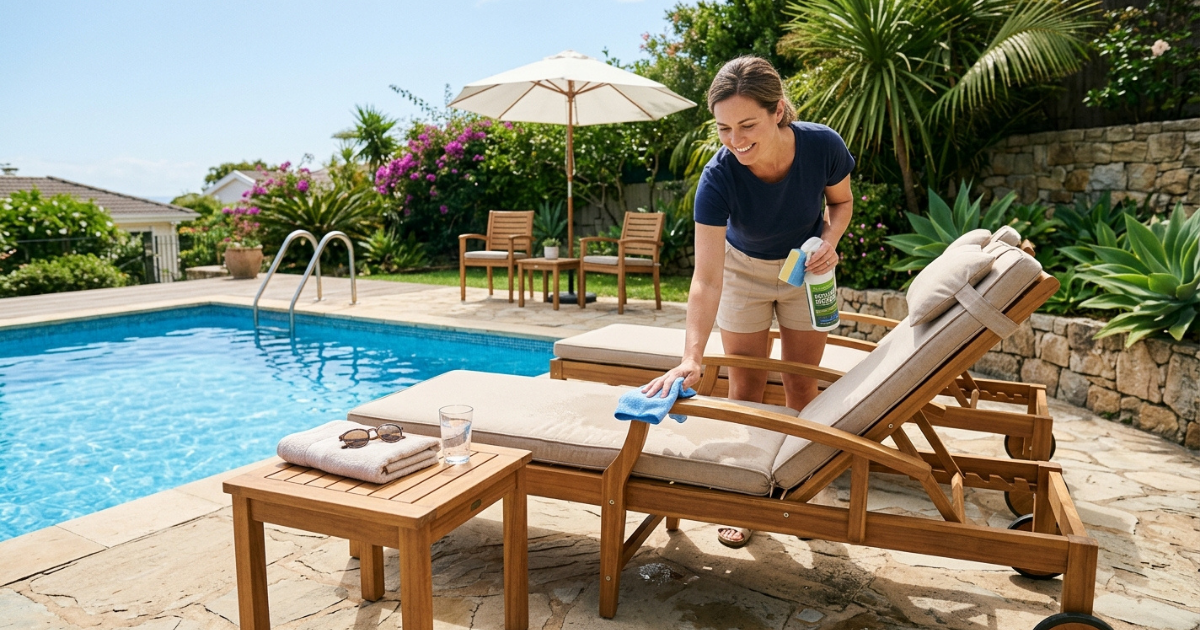
Poolside furniture takes a beating. Sunscreen smears, chlorine splashes, sticky drink rings - by midsummer, even nice pieces start looking dingy. The good news: you don't need a deep-clean every time you want your patio looking sharp. A quick routine, done often, keeps grime from ever building up in the first place.
Here's a simple 10-minute method, plus how to handle the specific stains poolside furniture deals with most.
The 3-Step Quick Clean
1. Rinse first, always. Before you touch a sponge or cloth, hose everything down. This washes away loose dirt, sand, and pollen so you're not just grinding grit into the surface when you wipe. A garden hose on a light spray setting works fine - you don't need pressure washer strength for a routine clean.
2. Wipe with mild soapy water. Mix a few drops of dish soap into a bucket of warm water. Wipe down arms, seats, and tabletops with a soft cloth or sponge. This step handles everyday grime: dust, light sweat, general outdoor buildup. Skip anything abrasive - a soft cloth is enough for most materials, whether it's resin patio chairs, aluminum, or sealed wood.
3. Quick scrub the trouble spots. For anything the wipe-down didn't lift - a sunscreen smear, a dried drink ring - use a soft-bristle brush with the same soapy solution. A few circular scrubs usually does it. Rinse again, then let everything air-dry in the sun, which also helps kill off any mildew spores.
That's the whole routine. Rinse, wipe, scrub the spots. Ten minutes, tops.
Dealing With the Stains Poolside Furniture Actually Gets
Sunscreen. This is the sneaky one - it looks clear going on but leaves an oily film that attracts dust and turns yellow-ish over time. Regular dish soap actually cuts through sunscreen oil well, since it's designed to break down grease. If a spot's stubborn, let the soapy water sit on it for a minute or two before scrubbing.
Chlorine. Pool water itself won't usually stain furniture, but it can dry out and fade fabric over time, and it leaves a slight residue on hard surfaces. A plain water rinse right after swimming (before the chlorine has a chance to dry) prevents most of this. If you already see light fading on cushions, there's not much to reverse - but keeping them out of direct chlorine splash zones going forward helps a lot.
Sticky drink stains. Soda, juice, or cocktail spills leave a tacky residue that attracts dirt and bugs if left alone. Warm soapy water handles most of these easily, but for a spot that's dried and stuck, a paste of baking soda and a little water can help lift it before you scrub.
How Often to Quick-Clean vs. Deep-Clean
You don't need to treat every clean the same way. Here's a simple way to think about it:
-
Quick-clean (the 10-minute routine above): Every week or two during pool season, or anytime you notice a fresh spill or smear. This is maintenance, not restoration - it's meant to stop dirt from ever settling in.
-
Deep-clean: Once a month, or at the start and end of the season. This means removing cushions to wash separately, getting into joints and crevices with a brush, and checking for any mildew starting to form underneath furniture or in shaded spots.
Sticking to the quick routine regularly is really what saves you from ever needing a heavy scrub-down. Grime is far easier to wipe away fresh than after it's baked in the sun for a month.
A Few Extra Tips
-
Rinse furniture the same day as a spill when you can - same-day cleanup takes a fraction of the effort that a week-old stain does.
-
Cushions and fabric pieces hold onto stains more than hard surfaces, so it's worth making or swapping in fresh outdoor cushions if yours are past saving.
-
If you're shopping for new poolside pieces, materials that shrug off sun, chlorine, and spills - like the fade-resistant fabrics used on our patio deep seating sofas and ottomans - will save you a lot of this work down the road.
A little upkeep goes a long way. Keep the routine short and consistent, and your poolside setup will stay guest-ready all summer.