
A bar stool looks simple — four legs, a seat, maybe a back. But if you've ever sat on one for a two-hour dinner and gotten up with a sore lower back or numb feet, you already know that not all stools are built the same. A few measurements make the difference between a stool you can sit in comfortably and one that only works for a quick coffee.
Here's what actually matters: footrest placement, whether you need a backrest at all, and how deep and wide the seat should be for your body.
Why Footrests Matter More Than You'd Think
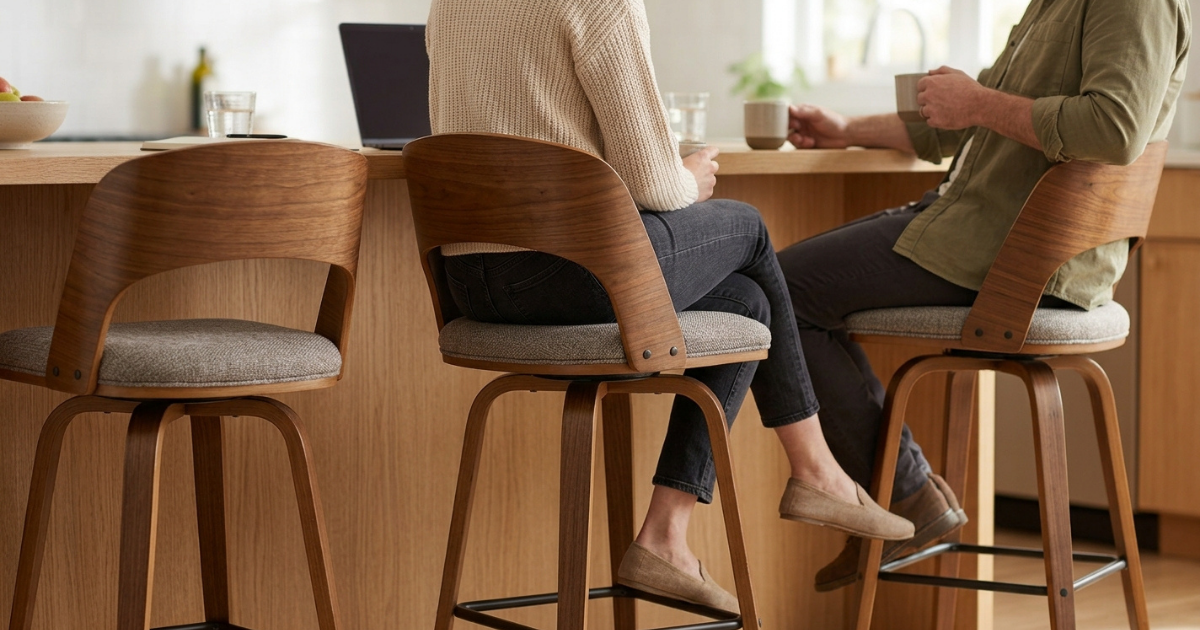
When your feet dangle without support, your legs aren't just uncomfortable — they're doing quiet, constant work. Blood flow gets restricted behind the knees, your lower back tenses to keep your legs from swinging, and after 20 or 30 minutes you start shifting around trying to find relief. A footrest fixes all of that by taking the weight of your legs off your hips and lower back.
Where should the footrest sit? As a rule of thumb, it should be about 7 to 10 inches below the seat. That gap lets your knees bend at a natural, relaxed angle instead of forcing your legs to hang straight down or scrunch up too high. If you're taller than average, look for stools with an adjustable or extra-low footrest, since a footrest that's too high can push your knees up uncomfortably.
If you're shopping for stools that will see regular, everyday use — not just the occasional quick seat — it's worth checking the footrest height listed in the product specs before you buy. Well-designedmodern bar stools usually list this detail because it has such a big effect on comfort.
When You Actually Need a Backrest
This is the question people usually stall on: are backrests important on bar stools, or is that just a nice-to-have?
The honest answer is that it depends entirely on how long you'll be sitting.
A backrest matters when:
-
You're using the stool for long meals, not just quick snacks
-
It's your everyday seat at a kitchen island where you work, eat, or sit while chatting for a while
-
An older adult or someone with back sensitivity will be using it regularly
-
The stool doesn't have arms, so your back gets no other support
In these cases, a backed stool takes pressure off your lower spine and makes it much easier to relax into the seat for 20+ minutes at a time. Stools like theModway Captain Bar Stool, which is built with the support of a regular chair but the height of a bar stool, are a good example of this — you get the height you need at a counter without giving up back support. Outdoor options like theWoodard Tucson Swivel Bar Stool do the same job on a patio, pairing a supportive back with armrests for stools that will get used for full outdoor meals.
Backless stools are fine when:
-
The seating is for quick moments — a fast coffee, checking your phone, a five-minute chat
-
Space is tight and a backless design lets you tuck stools further under the counter
-
You want stools that are easy to move, stack, or store
-
The look you're going for is more open and minimal
If your bar stools mostly get used for fast, in-and-out moments rather than sit-down meals, a backless design isn't a compromise — it's just the right tool for that job, and it usually costs less and takes up less visual space in the room.
Seat Depth and Width: The Measurement People Skip
Backrests get all the attention, but seat depth and width quietly do a lot of the work in determining whether a stool feels comfortable for a long sit.
-
Seat depth (front to back) should generally be around 15 to 17 inches for most adults. Too shallow and you feel like you're perched on the edge; too deep and the front edge of the seat digs into the back of your knees, cutting off circulation.
-
Seat width should give you at least 16 to 18 inches of space. This matters more than people expect, especially if arms or elbows are likely to bump a neighboring stool during a meal.
-
Taller users (roughly 6'2" and up) generally do better with a slightly deeper seat, around 17 to 18 inches, plus a footrest set a bit lower than standard to keep the knee angle comfortable.
If you're buying stools for a kitchen island where people will actually sit and eat, rather than a bar top used for quick drinks, it's worth checking these two measurements before checking anything else — finish, color, and style are easy to fix later, but seat size isn't.
Matching the Stool to How You'll Actually Use It
The best way to think about bar stool comfort is to match the stool to the sitting you'll actually be doing:
-
Quick seating, tight kitchens: a simple backless stool, prioritizing width you can tuck away easily.
-
Everyday island seating, longer meals, older users: a backed, footrest-equipped stool like the Moe's Home Collection Eisley Barstool or the counter-height Moe's Astbury Counter Stool, which sits lower and pairs naturally with a well-placed footrest.
-
Outdoor entertaining or patio bars: durable, weather-resistant options such as the Woodard Belden Swivel Bar Stool or the broader range of patio bar stools, many of which come in backless, low-back, and high-back versions depending on how long guests tend to linger.
Comfort on a bar stool really comes down to three simple checks: does the footrest sit at the right height for your legs, does the backrest match how long you'll actually be sitting, and is the seat sized for your body. Get those three right, and the stool disappears - which is exactly what you want from a piece of seating you'll use every day.


